ServicesCrowns & Bridges
Crowns & Bridges in Marlborough
A cracked tooth or a gap in your smile can make every meal a careful one. We rebuild teeth with crowns and replace missing ones with bridges, explain each step before we start, and check your bite until it feels like your own.
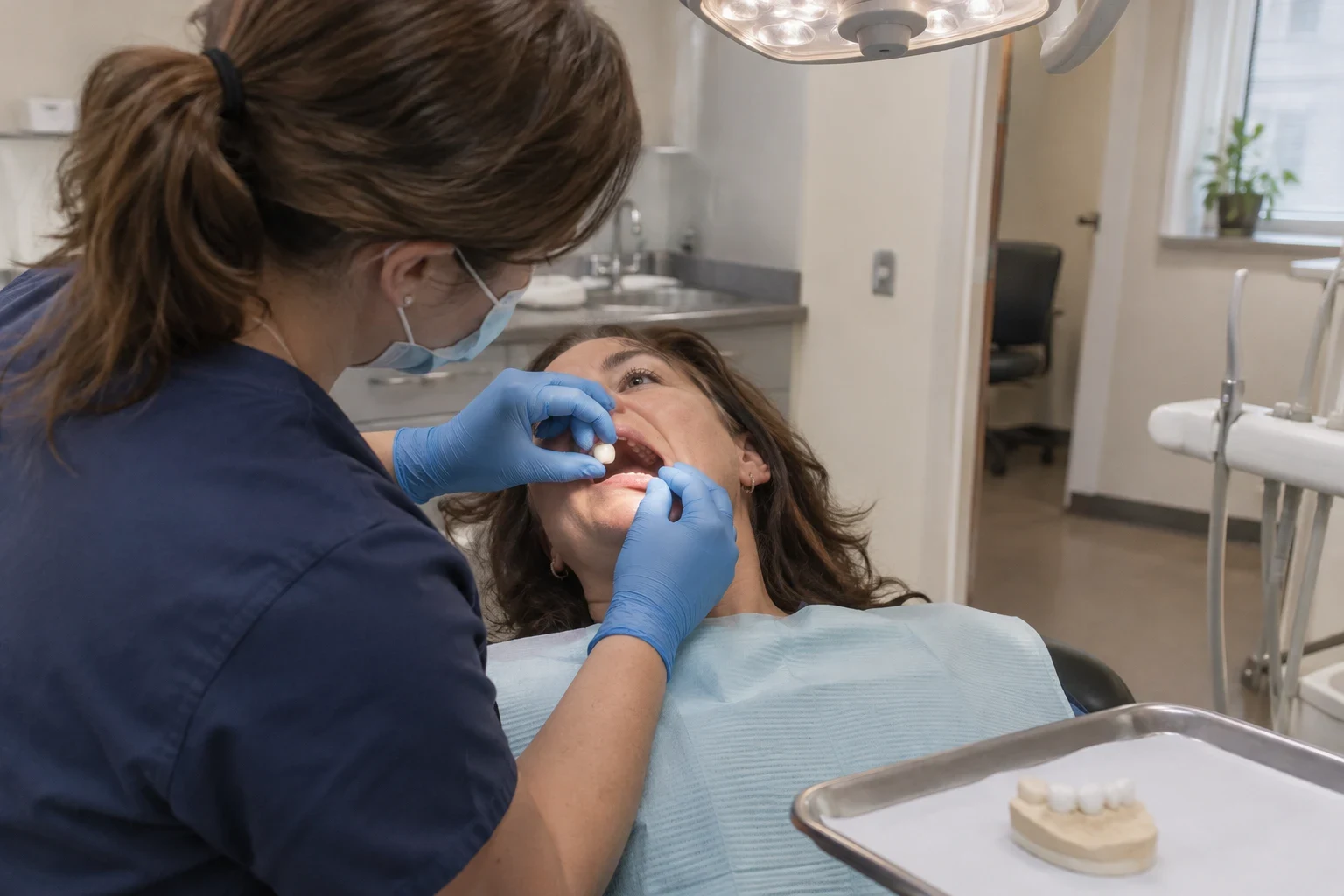
Saving a weak tooth or closing a gap
Think of a crown as a protective cover. It fits over a tooth that is cracked, worn down or holding so much filling material that it can no longer handle chewing alone. A bridge closes a gap left by a missing tooth: crowns on the neighboring teeth anchor a replacement tooth that sits in the space. We shape and shade both to fit your bite and blend with the teeth around them.
Some damaged teeth do fine with less. When a filling is enough, we tell you plainly and send you to our fillings care rather than a crown. Every recommendation follows a full exam, with the tooth checked from all sides, so your treatment plan reflects what we actually find.
Whether you live in Marlborough or drive in from Hudson or Southborough, you get the same careful approach: safe, sterile steps, plain explanations at each stage and costs you know ahead of time.
What your crown or bridge care includes
- A careful exam first
- We check the tooth, the gums around it and how your teeth meet. X-rays are taken only when they answer a real question about the tooth, and you wear a protective apron for them.
- A health history review
- We ask about medications, allergies and past dental work before any numbing or shaping. Blood thinners, metal sensitivities and heart conditions can all change how we plan the visit.
- Sterile instruments, every time
- Instruments are cleaned and sterilized between patients and opened fresh for your visit. Surfaces in the treatment room are wiped down before you sit in the chair.
- A temporary crown
- While your permanent crown or bridge is being made, a temporary one protects the shaped tooth. We show you how to eat and floss around it so it stays in place.
- Shade matching
- We compare your natural teeth under good light so the new crown blends in with your smile.
- A final bite check
- Before you leave with the permanent piece, we test how your teeth come together and adjust any high spots. A crown that sits even a little high can make the jaw sore.
When a tooth is telling you it needs more support
A rough edge or visible line
If your tongue finds a sharp spot or you can see a line running across a tooth, it has likely split. Chewing tends to widen a crack, and a crown keeps the tooth from coming apart.
A twinge as you chew
A quick, sharp pain when you let go of a bite, often with firmer foods, is a classic clue that a tooth is cracked.
A filling bigger than the tooth around it
Once a filling fills most of the tooth, the remaining walls are thin and can snap off without warning.
A space where a tooth used to be
Neighboring teeth gradually lean and shift toward an empty spot. A bridge keeps them steady and lets you chew on both sides again.
An older crown showing its age
Crowns can wear thin, chip or pull away at the margins over the years, which gives decay a way in underneath. We look for this during your exams and cleanings.
How a crown or bridge visit works
- 1
Exam and treatment plan
We look at the tooth, take any needed x-rays and talk through your options. You get a clear treatment plan and an explanation of what your insurance may cover before you decide.
- 2
Numbing and shaping
We numb the area gently and wait until it is fully numb before starting. Then we shape the tooth so the crown can fit over it, removing any decay we find along the way.
- 3
Impressions and a temporary
We record the exact shape of your teeth so the lab can make your crown or bridge. A temporary goes on the same day so you leave with a covered, protected tooth.
- 4
Fitting the permanent piece
At your second visit we remove the temporary, try in the permanent crown or bridge and check the fit, color and bite. Once it is right, we bond it in place.
- 5
Aftercare
We go over how to brush and floss around it, including how to clean under a bridge. Some tenderness for a few days is normal; if your bite feels off, we will see you to adjust it.
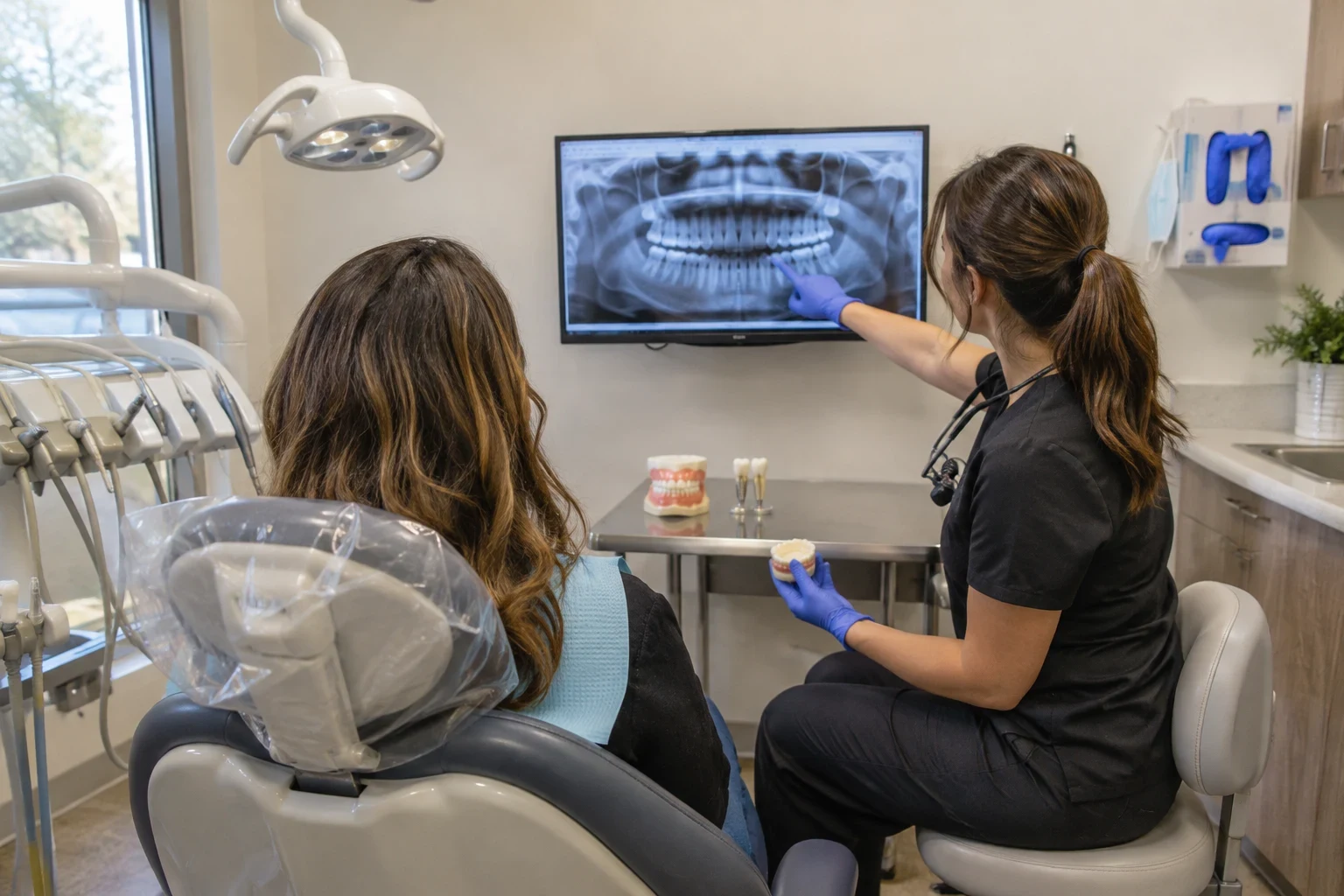
What shapes the price of your crown or bridge
Every tooth is a little different, so what you pay depends on the tooth itself, the material and what the exam shows. We walk you through the costs before any work begins, and you are welcome to take time to decide. We accept most dental insurance plans, and patients without coverage have two routes: our Office Dental Plan for patients without insurance, or financing through the CareCredit Patient Payment Plan.
- One tooth or several
- A single crown restores one tooth. A bridge joins at least three units together to span a gap, so it costs more than one crown.
- The material chosen
- All-ceramic, porcelain fused to metal and full metal crowns are priced differently and each suits certain parts of the mouth. We suggest the one that will last best where your tooth sits.
- How much tooth is left
- When decay or a deep break leaves little structure behind, a buildup may come first so the crown has a solid base to grip.
- Extra steps before a bridge
- A tooth that cannot be saved has to come out before a bridge goes in. That extraction becomes part of your treatment plan.
- Your plan's benefits
- Insurance coverage for crowns and bridges differs widely from one plan to the next. We go over your benefits with you before treatment starts.
Common questions about crowns and bridges
Something not covered here? (508) 682-5575
Will a crown be painful?
We numb the tooth first and confirm it is fully numb before any shaping begins. Most patients notice pressure and some vibration, not pain. The gum nearby can feel tender for a few days afterward.
How many appointments does a crown need?
Two in most cases. At the first we shape the tooth, take impressions and place a temporary. At the second, after the lab sends the finished crown, we fit it and bond it in place.
How should I treat a temporary crown?
Stay away from sticky foods such as caramel and chewing gum, and chew on the opposite side when possible. Pull floss out sideways rather than lifting it up through the contact. If the temporary comes loose, hold on to it and phone us for an appointment.
Are there other ways to replace a missing tooth besides a bridge?
Yes. At your exam we go through the options for your particular gap, including the upsides and drawbacks of each. A bridge is a good choice when the neighboring teeth are strong enough to anchor it.
How do I keep the area under a bridge clean?
Because the units are joined, ordinary floss will not slip between them. We show you how to use a floss threader or a small interdental brush beneath the replacement tooth. A clean space there helps protect the anchor teeth.
Can I get a crown without dental insurance?
You can. Our Office Dental Plan was created for patients who have no coverage, and the CareCredit Patient Payment Plan lets you pay in smaller amounts over time. We explain how each one works when you phone us.
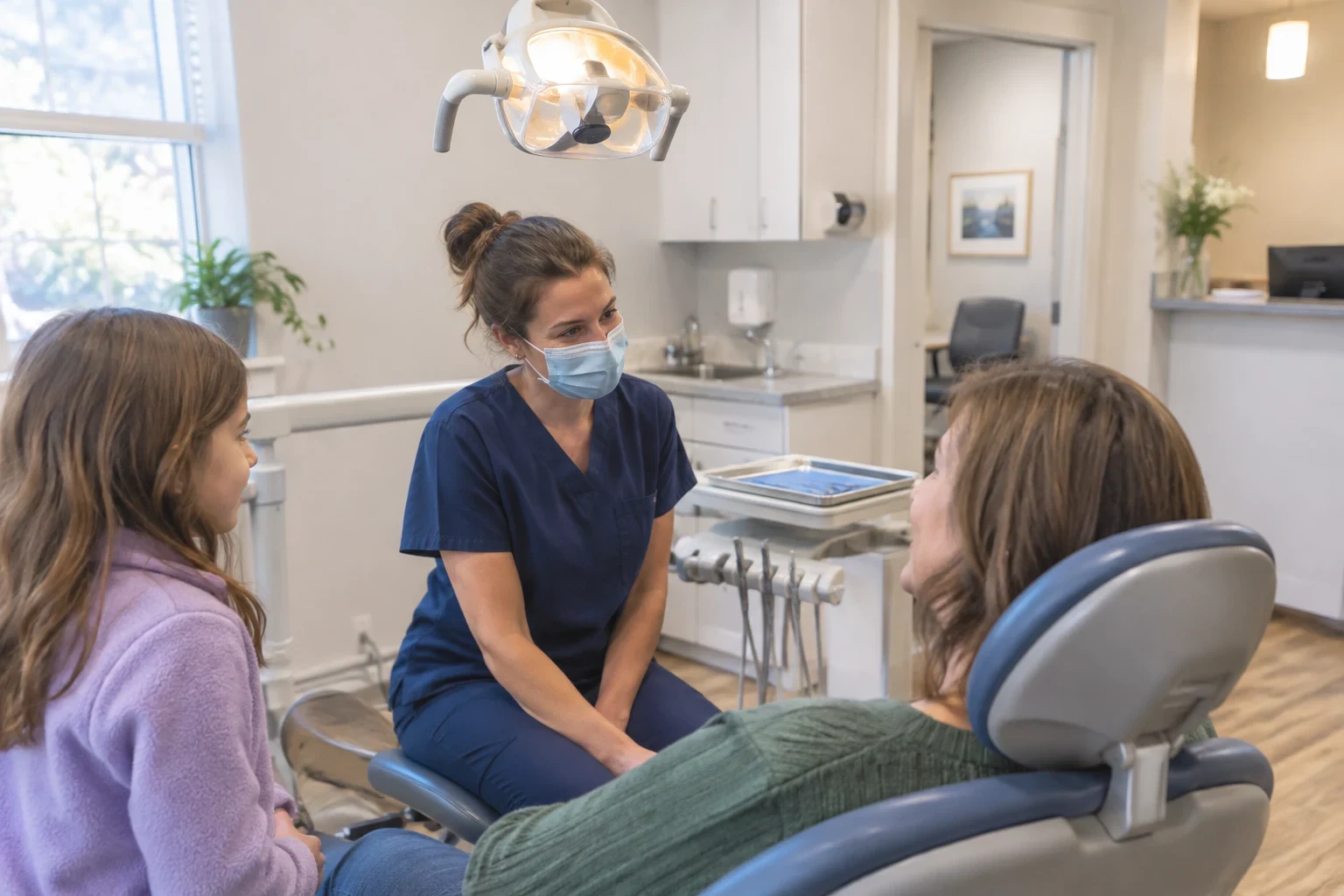
Let's take a look at that tooth
Describe what is bothering you and we will find a time to examine it and go over the options. The plan and the cost are explained before any treatment starts.