ServicesKids' Dentistry
Kids' Dentistry in Marlborough
We see children from their first tooth through their teen years. Visits move at your child's pace, we explain each step in kid-friendly words, and we keep x-rays, materials and instruments to careful, safe standards so you can focus on your child.
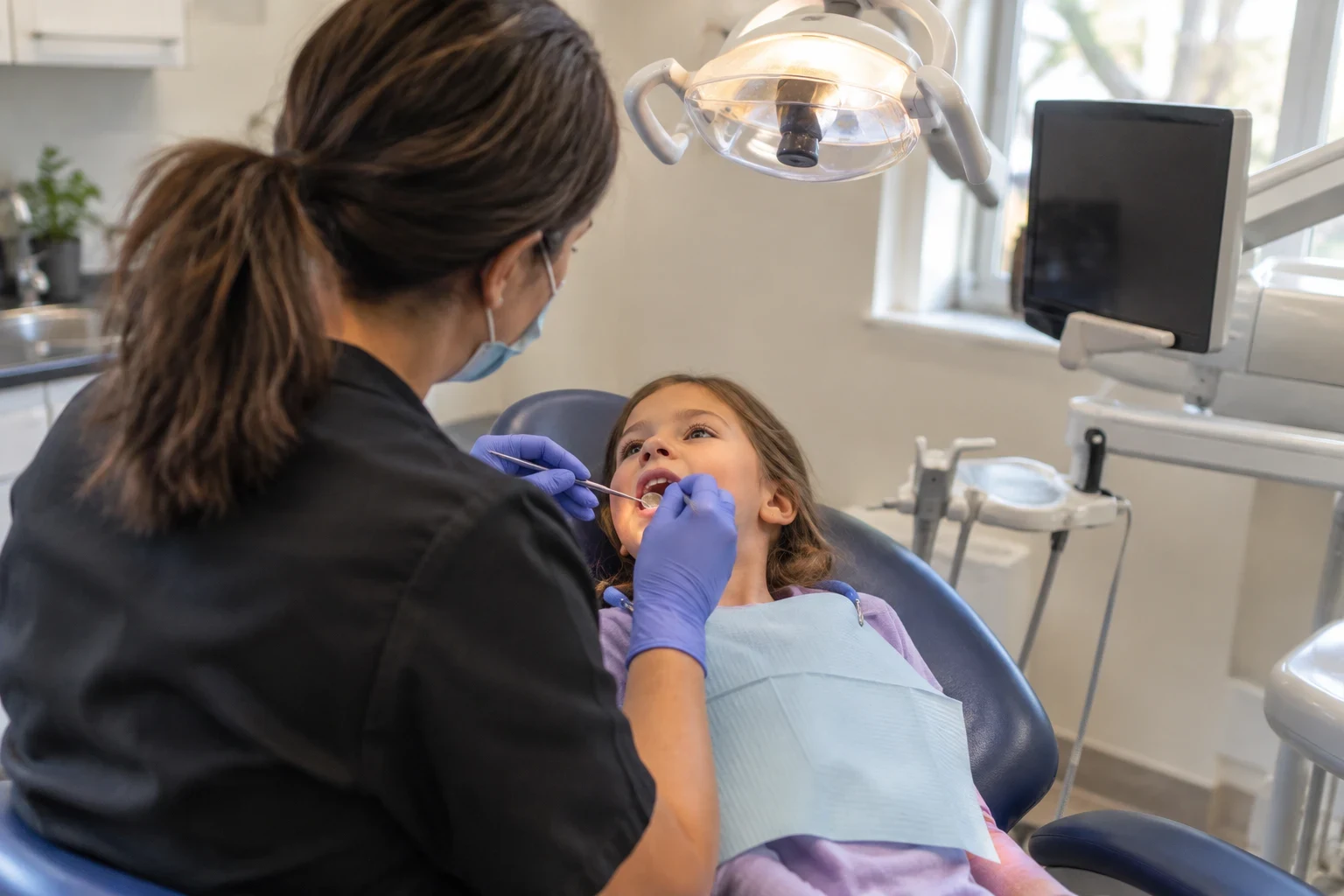
Dental care built around how kids actually feel
Children's teeth need their own kind of care. The enamel on baby teeth is thinner than on adult teeth, so decay can travel to the nerve in less time, and each baby tooth saves a spot for the permanent tooth growing underneath. Seeing your child regularly lets us spot trouble early, while the fix is still small and simple.
Safety shapes how we run every appointment. We take x-rays only when your child's age and risk call for them, and a protective apron and thyroid collar go on whenever we do. Instruments are sterilized and opened fresh for each patient, and fluoride is measured to your child's size. You are welcome in the room, and we explain what we find in plain words.
Most families from Marlborough and nearby towns like Hudson, Northborough and Framingham begin with a checkup and cleaning. If something needs attention after that, we put together a simple treatment plan and walk you through it.
What kids' dentistry covers here
Checkups and gentle cleanings
We count teeth, check gums and bite, and polish away plaque. For toddlers this is often a quick knee-to-knee exam with a parent holding them.
Fluoride varnish
A thin coat painted on in seconds that strengthens enamel. We use the amount suited to your child's age, and it sets quickly so there is little to swallow.
Sealants on back teeth
The deep grooves in molars trap food and are where many childhood cavities start. A sealant fills those grooves with no drilling and no numbing.
Tooth-colored fillings
When a cavity does form, we numb the area gently and use a tooth-colored filling. See our Fillings page for how that visit runs.
Low-dose x-rays when needed
We only take images when they answer a real question, like decay between teeth or how adult teeth are coming in, and we always shield your child.
Growth and bite checks
We watch how teeth and jaws develop and tell you early if crowding or a crossbite is forming, so you have time to plan.
Signs your child should come in
White or brown spots
Chalky white lines near the gum are often the first stage of decay. Brown or dark spots usually mean it has gone further.
Complaints when eating
Wincing at cold drinks, sweets or chewing on one side can point to a cavity or a cracked tooth.
Bleeding or puffy gums
Gums that bleed when brushing usually mean plaque is building up along the gumline. A cleaning and a few brushing tips often clear it up.
A knocked or chipped tooth
Falls on the playground or in sports can crack teeth or loosen them. Even if it looks fine, call us to set up a visit so we can check the root and nerve.
No visit by the first birthday
Children should see a dentist by age one or within six months of the first tooth. If that has passed, it is a good time to start.
How a kids' visit goes
- 1
A quick phone call first
When you call, we ask about your child's age, any worries and past visits. If your child is nervous, tell us and we will plan a slower first appointment.
- 2
Meet, show and tell
We let your child sit in the chair, see the mirror and feel the polisher on a fingernail before anything goes in their mouth. Fear drops a lot when nothing is a surprise.
- 3
Exam and cleaning
We clean and check each tooth, take x-rays only if needed, and apply fluoride. Every instrument comes from a sealed, sterilized pouch.
- 4
A clear plan for you
We show you what we found, explain whether anything needs care now or can be watched, and write out the next steps and their cost before any treatment.
What shapes the price of your child's visit
For most kids, the simplest visit is an exam paired with a cleaning, and your coverage settles most of what you pay for it. We accept most dental insurance plans. Families without coverage can join our Office Dental Plan, and the CareCredit Patient Payment Plan lets you spread larger treatment costs over time. We go over the cost with you before any treatment starts.
- Your dental plan
- Many plans cover children's preventive visits well. Yearly maximums and any waiting periods on your plan decide how much is left on your side.
- Whether images are taken
- A lot of visits need no x-rays. When we do take them, it is because they can show something, like decay between teeth, that we cannot see with our eyes.
- How many teeth need sealants or fillings
- Both are priced per tooth. One sealed molar and four sealed molars lead to different totals.
- Pacing the care
- Some children do far better with two short visits than one long one. We set the schedule around what keeps your child comfortable, and that choice can change how the bill adds up.
Questions parents ask about kids' dentistry
Something not covered here? (508) 682-5575
Are dental x-rays safe for my child?
Yes, when they are used with care. We only take x-rays when your child's age and cavity risk call for them, we use the lowest setting that still gives a clear picture, and a protective apron and thyroid collar go on every time. Many visits need no x-rays at all.
Can I stay with my child during the appointment?
Yes, parents are welcome in the room. Little ones often feel braver sitting with you, and we talk you through each step as we go.
Why fix a cavity in a baby tooth that will fall out?
Some baby molars hang on until a child is 10 to 12 years old. Untreated decay in one of them can turn into a toothache or an abscess and may harm the permanent tooth forming beneath it. Baby teeth also save space, which helps adult teeth come in straight.
How much fluoride toothpaste should my child use?
For children under three, use just a smear about the size of a grain of rice. Between three and six, a pea-sized dab is enough. We are happy to show you at the visit and adjust the advice to your child's cavity risk.
What if my child is scared of the dentist?
Mention it when you call. We can set up a short first visit that is only about meeting us and looking around, then move slowly and pause whenever your child needs a break. A gentle start tends to make every later visit easier.
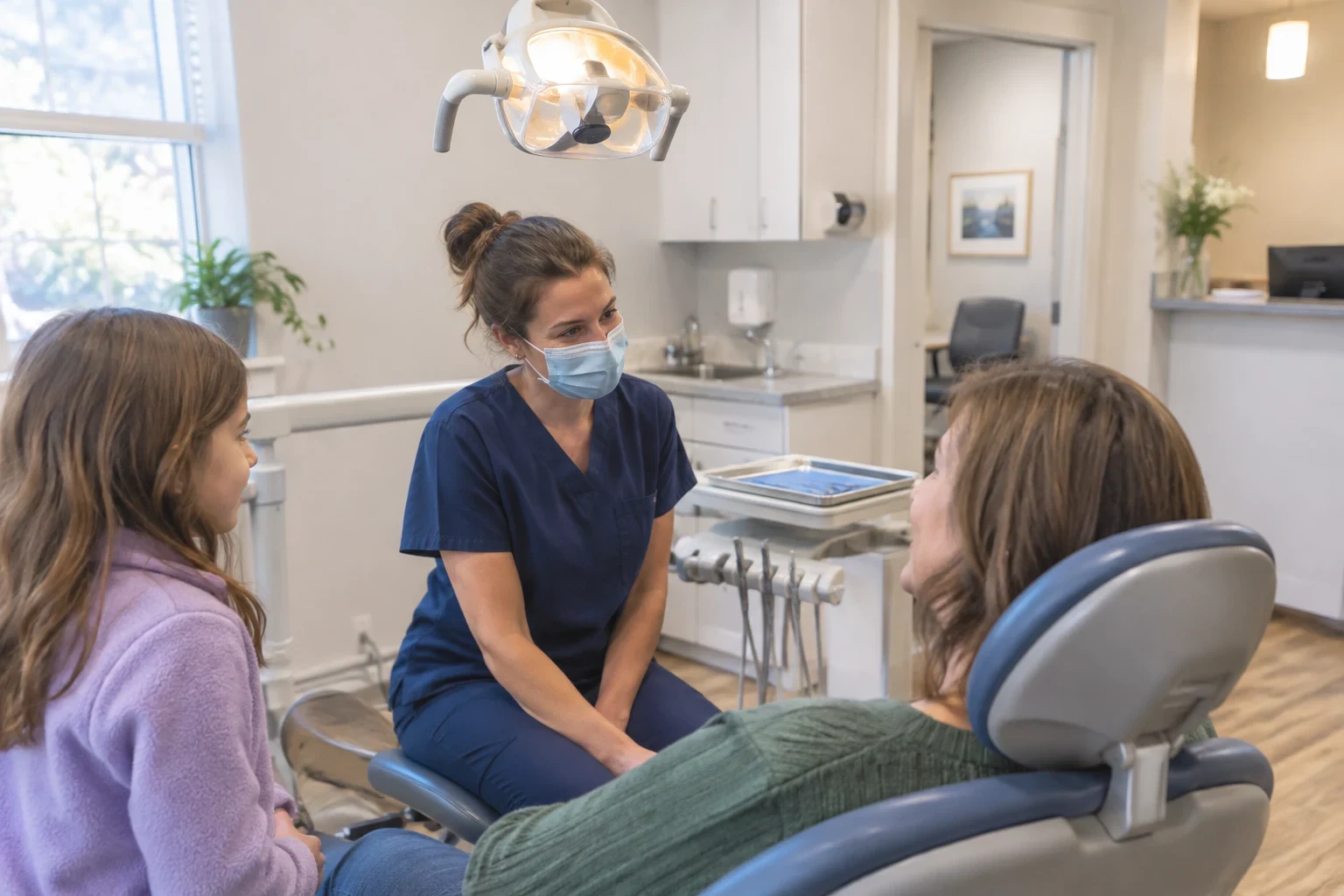
Ready for your child's next checkup?
Give us a call and we will find an appointment that fits your family's schedule. Tell us about any worries and we will plan the visit around them.