ServicesInvisalign / Clear Aligners
Invisalign and Clear Aligners in Marlborough
Clear aligners can straighten crowded teeth, close gaps and improve your bite without metal brackets. Before any tooth moves, we check for decay, gum problems and bone support. That way your new smile is built on a healthy base.
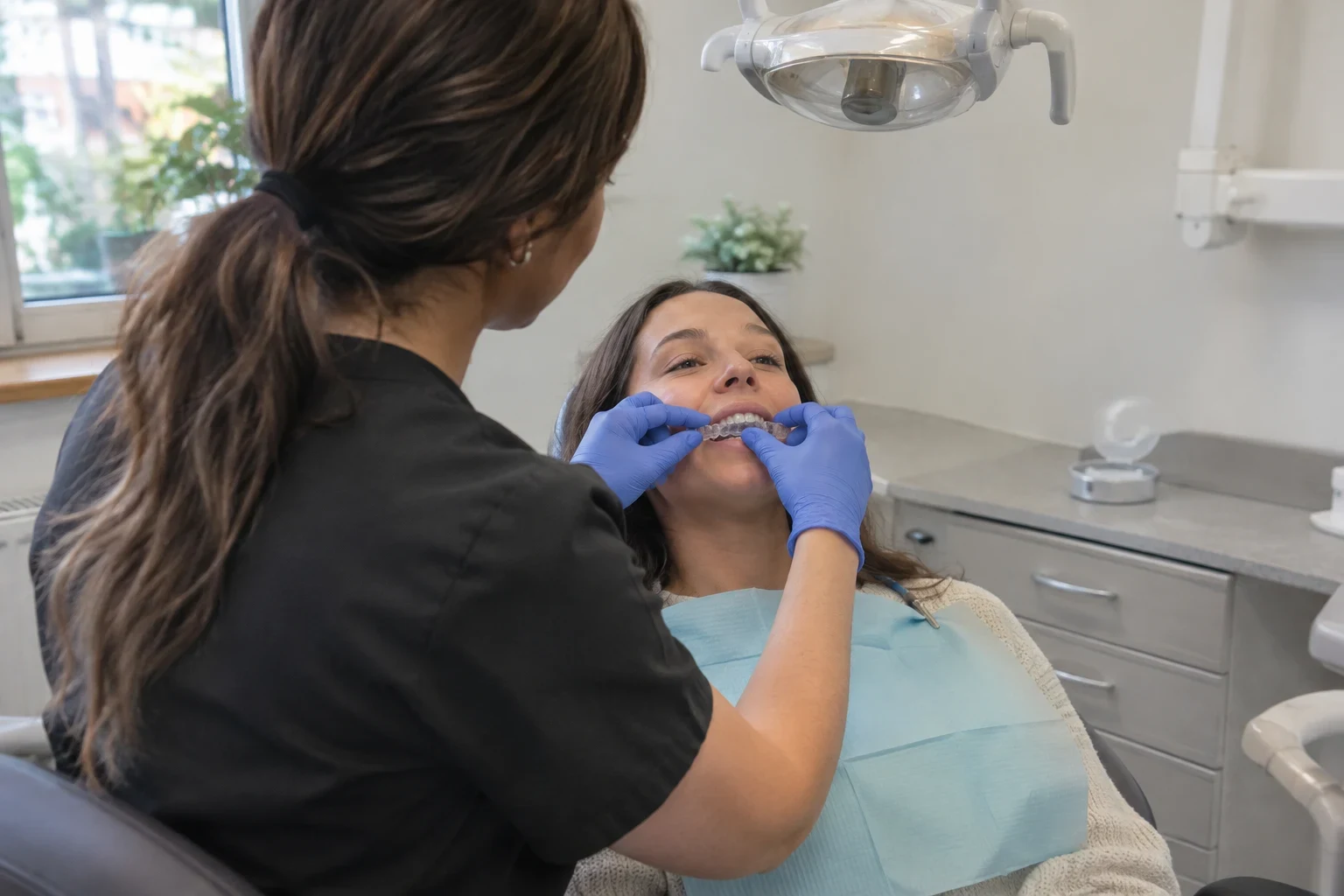
Straighter teeth, moved at a safe pace
Clear aligners are thin, removable trays made from a scan of your teeth. Each set is shaped slightly differently from the last, so your teeth shift a small amount at a time. You switch to a new set on a schedule we give you, and over months the changes add up.
Moving teeth puts pressure on the roots, gums and bone that hold them. That is why we never hand out aligners without a full exam first. A hidden cavity or inflamed gums can get worse under trays that cover the teeth most of the day, so we treat those problems before treatment starts.
Aligners work well for many adults and teens with mild to moderate crowding, spacing or bite issues. Some cases need a different approach, and if yours does, we will tell you plainly at the consult instead of starting something that will not give you the result you want.
What your aligner treatment includes
Health check before anything moves
We look at every tooth, measure gum pockets and take X-rays to see the roots and bone. If you need a cleaning or a filling first, we handle that before your trays are ordered.
Digital scan and treatment plan
A scan of your teeth replaces most of the gooey impression material people remember. From it, we map how each tooth will move and walk you through the plan so you know what to expect.
Attachments and gentle shaping
Small tooth-colored bumps called attachments give the trays something to grip. In some cases we smooth a tiny amount of enamel between teeth to make room, and we explain exactly where and why before we do it.
Regular progress visits
We check your fit, gums and tooth movement every several weeks. If a tooth is lagging or a tray is not seating well, we catch it early.
Retainers to hold the result
Teeth tend to drift back once treatment ends. Retainers keep them where they belong, and we show you how to wear and clean them.
Signs clear aligners may help you
Crowded or overlapping teeth
Teeth that twist or overlap trap food and plaque. They are harder to brush and floss well, which raises the risk of cavities and gum trouble over time.
Gaps between teeth
Spaces can catch food and sometimes widen as the years go by. Aligners can close many of them gradually.
A bite that feels off
If your front teeth do not meet, or your upper and lower teeth line up unevenly, you may notice chipping or uneven wear. Some bite problems respond well to aligners.
Teeth shifted after braces
Plenty of adults had braces as kids and stopped wearing a retainer. Aligners are often a good way to bring those teeth back into line.
You avoid smiling in photos
How you feel about your smile matters too. If straighter teeth would make you more comfortable, that is a reasonable reason to ask.
How treatment goes, visit by visit
- 1
Consult and exam
We talk about what bothers you, examine your teeth and gums and take X-rays. You leave knowing whether aligners suit you and what needs to happen first.
- 2
Scan and plan
Once your mouth is healthy, we take a digital scan and build your treatment plan. We go over the expected timeline and the number of trays.
- 3
Fitting day
We place any attachments, fit your first trays and check that they seat fully. You practice taking them in and out before you leave, and we cover cleaning and wear time.
- 4
Check-ins and finishing
You come back every several weeks so we can track progress and gum health. At the end, we fit your retainers and set up your next cleaning.
What affects the cost of clear aligners
No two mouths move the same way, so your cost comes from your own scan and treatment plan, not a flat number. We accept most dental insurance plans, and some of them carry orthodontic benefits. If you have no insurance, our Office Dental Plan for patients without insurance is one route. The CareCredit Patient Payment Plan is another way to break the total into smaller payments.
- How far your teeth need to move
- Closing a small gap takes fewer trays than untangling heavy crowding or shifting your bite. A longer series of trays and more months of treatment usually raise the cost.
- Dental work needed first
- A cleaning, fillings or other care may need to come before the trays. We show that work as its own line so you can tell general care apart from the aligner treatment itself.
- Refinements
- Now and then a tooth needs a few extra trays near the end to settle into place. We go over how that is handled before your first set is ordered.
- Retainers
- You will need retainers to keep your new smile in place. We bring them up at the very first visit so they are part of the plan from the start.
- What your plan covers
- Orthodontic coverage differs a lot from one insurance plan to the next, and some set age limits or lifetime maximums. We help you sort out your benefits before any treatment begins.
Questions about Invisalign and clear aligners
Something not covered here? (508) 682-5575
Do aligners hurt?
Expect some pressure or light soreness for the first day or two of each new set. That feeling means the teeth are moving. It tends to settle fast, and softer foods make those days easier.
How long do the trays need to stay in each day?
Plan on wearing them roughly 20 to 22 hours daily. They come out for meals, for any drink besides plain water and for brushing. Long breaks without them slow your progress and can leave the next set fitting poorly.
Can I get aligners if I have crowns or fillings?
In many cases, yes. We make sure your current crowns and fillings are in good shape and that attachments will bond to them. If one needs to be redone, we usually take care of it first so the trays seat properly.
Are clear aligners an option for teens?
Plenty of teens do well with them when they keep the trays in as directed. We check that the adult teeth have come in and have an honest talk with the family about whether aligners or a different approach fits better.
Why do I need an exam and X-rays before starting?
Untreated decay or gum disease can get worse once teeth start moving, and some of these problems are only visible on X-rays. Looking first keeps the teeth you want straightened healthy through the whole process.
Do patients come from nearby towns?
They do. Besides Marlborough, we see patients from Hudson, Northborough, Southborough and other surrounding towns. Progress checks are usually short, which makes them easier to fit around work or school.
Ready to talk about straighter teeth?
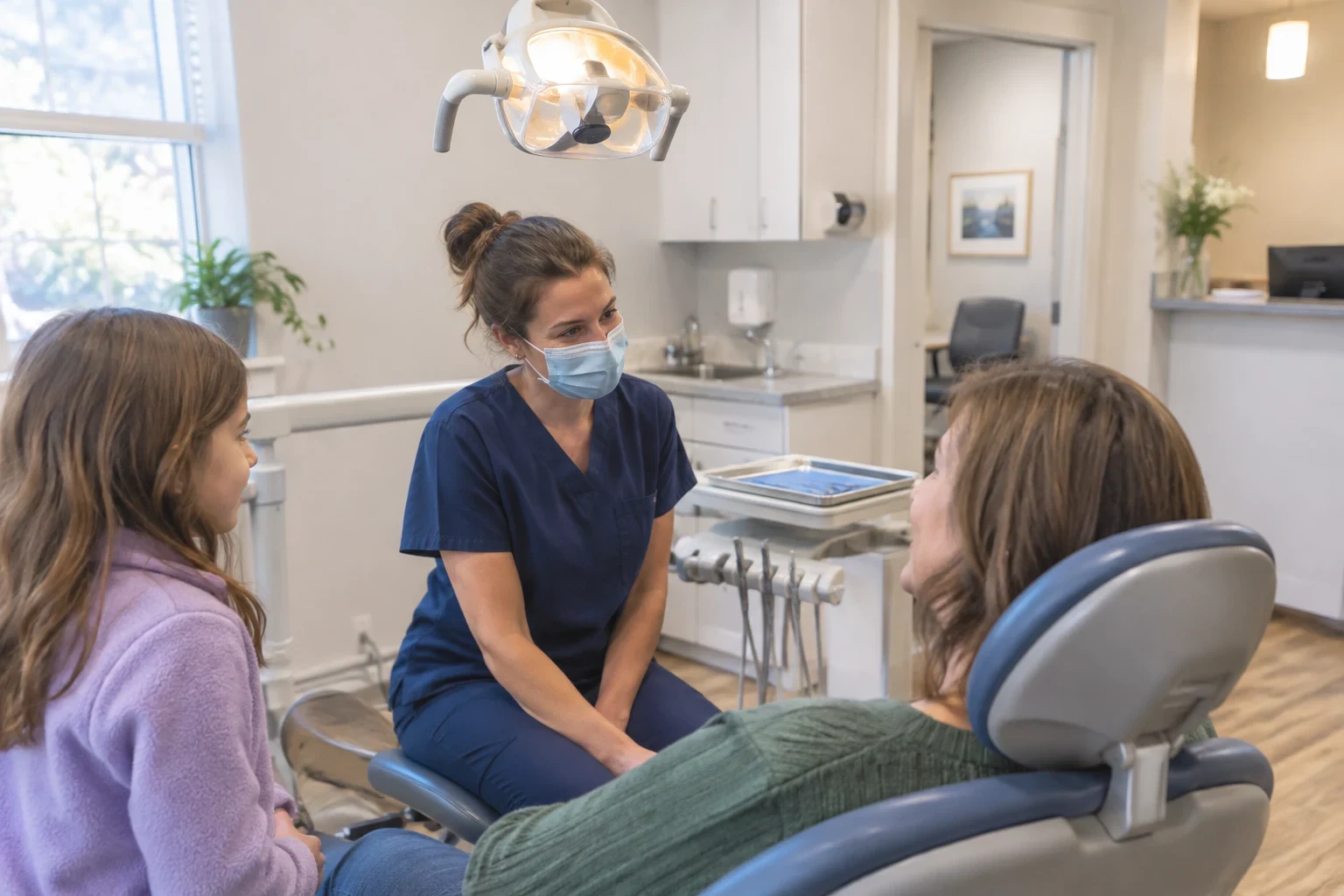
Your first step is a consult and exam so we can tell you honestly whether aligners fit your smile. Give us a ring and we will find a time that works for you.