ServicesExtractions
Tooth Extractions in Marlborough, MA
When a tooth is cracked past saving, badly infected or crowding its neighbors, removing it can end the pain and protect the teeth around it. We review your health history first, numb thoroughly, and send you home with clear aftercare and a plan for the gap.
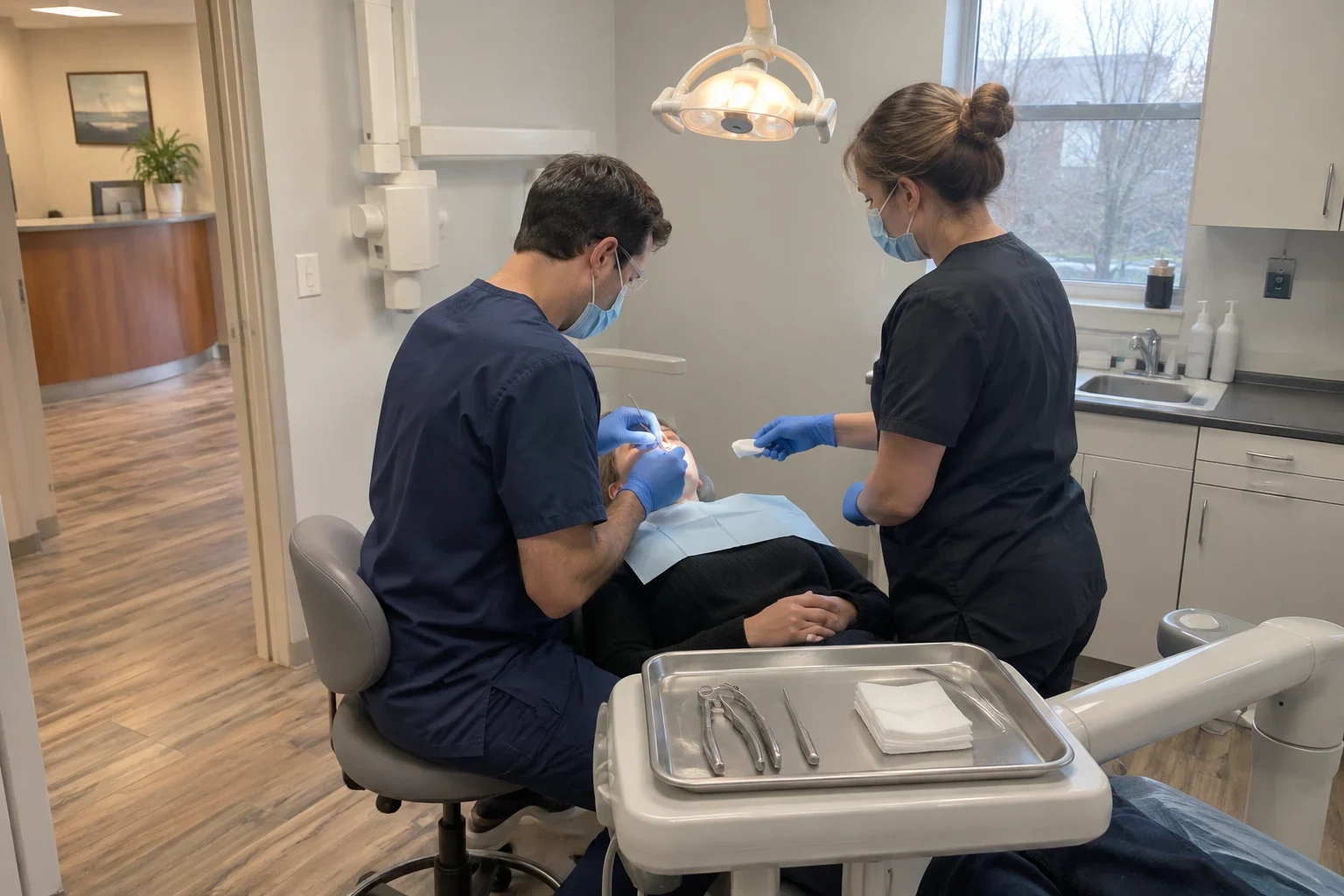
When removing a tooth is the right call
We would rather save a tooth than pull it. A filling or a crown fixes most damage, and we'll tell you plainly when that is still an option. Extraction makes sense when a tooth is split below the gumline, when decay has gone too deep to rebuild, when an infection keeps coming back, or when a tooth is blocking others from coming in.
Safety sets the pace of every extraction here. Before we numb anything, we go over your medications, allergies and health conditions, take an X-ray to see the roots, and talk through what you'll feel. Blood thinners, diabetes, heart conditions and recent surgeries all change how we plan the visit, so we ask about them every time.
Patients come to our Marlborough office from Hudson, Northborough, Framingham and other nearby towns for extractions for adults and children, including baby teeth that won't come out on their own.
What your extraction visit includes
Health history review
We confirm your medications, allergies and conditions before treatment. If anything means we should check with your physician first, we stop and do that rather than hurry ahead.
X-rays of the roots
An image shows the shape and length of the roots and how near the tooth sits to nerves and sinuses. That tells us whether it should come out whole or in sections, and whether it's one we can safely remove in our office.
Thorough numbing
We use local anesthetic and test the area before starting. Pressure is normal. Sharp pain is not, so raise your hand and we'll stop and numb further.
Careful removal
We loosen the tooth gently to protect the bone and gum around it, then place gauze to help a clot form. Stitches go in when the site needs them.
Written aftercare
You leave with instructions for bleeding, swelling, eating and cleaning, so you aren't wondering late at night what's normal.
A plan for the space
We talk through whether the gap should be replaced, with options like a bridge, which our Crowns & Bridges page explains. For children, we check that the adult tooth underneath is on track.
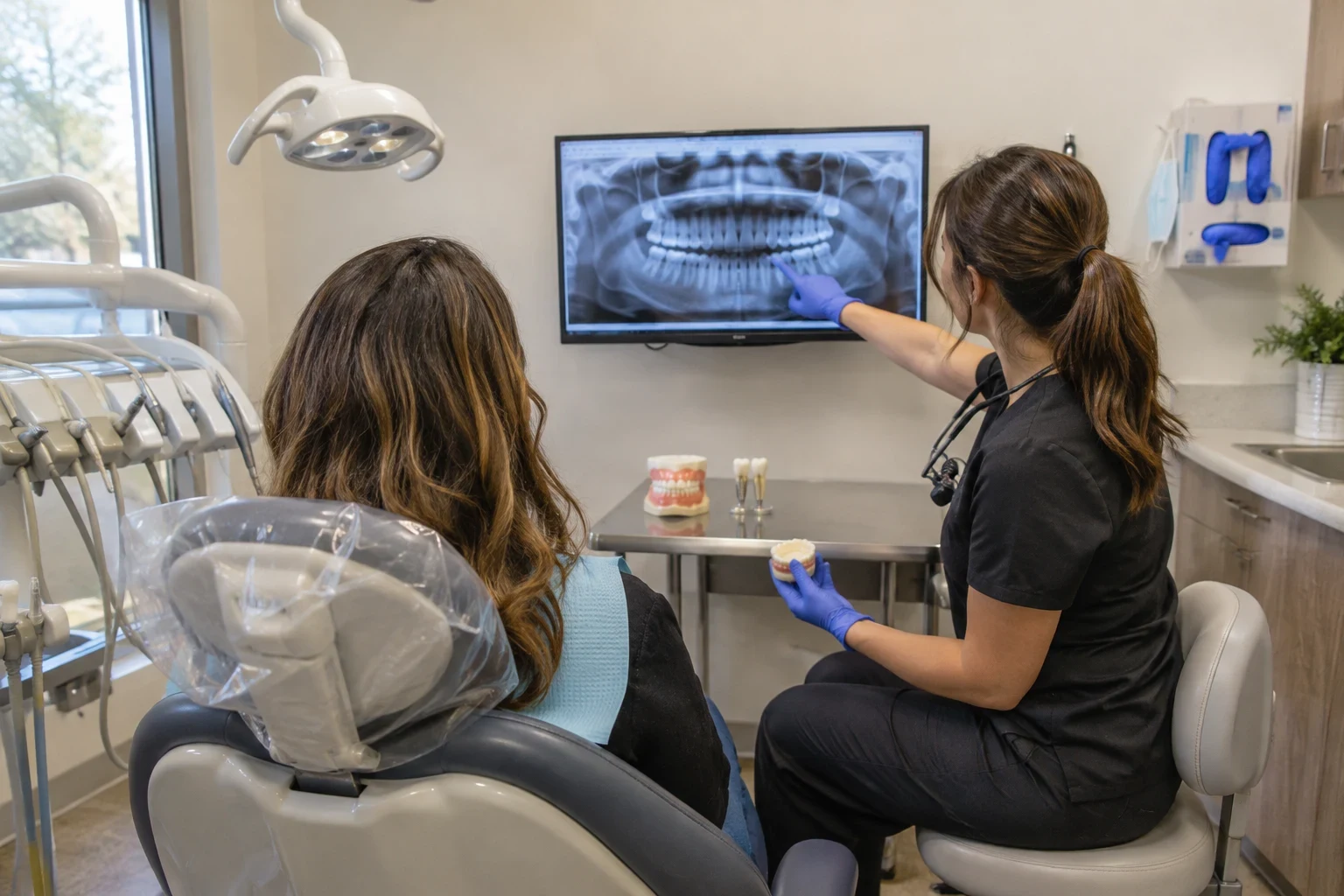
Signs a tooth may need to come out
- Pain that keeps coming back
- A throbbing tooth that flares again after antibiotics or earlier treatment often points to an infection the tooth can't recover from.
- A crack below the gumline
- Cracks that run into the root can't be sealed with a filling or covered with a crown. Biting may hurt in one sharp, specific spot.
- Gum swelling or a draining spot
- A small raised spot on the gum, a sour taste that lingers or a puffy jaw can all signal infection. Infection can spread, so book a visit soon instead of waiting to see if it settles.
- A loose adult tooth
- When gum disease has taken too much supporting bone, a tooth may wobble and drift. Sometimes it can't be stabilized.
- Baby teeth that won't let go
- If an adult tooth is coming in behind or beside a baby tooth that's still firmly in place, the baby tooth may need help coming out.
- Crowding before aligner treatment
- Some Invisalign treatment plans need space made first. We only recommend this when it truly helps the bite.
What happens at your extraction appointment
- 1
Arrival and a final check
When you arrive, we confirm the tooth, look over your medications and conditions one more time, and answer any last questions. A light meal beforehand is a good idea unless we've advised otherwise.
- 2
Numbing and a comfort check
We numb the area and wait until it's fully working. Together we agree on a hand signal so you can ask us to pause at any moment.
- 3
Removing the tooth
Most simple extractions take just a few minutes once you're numb. We work slowly around the roots, and a tooth with curved roots may come out in sections to protect the bone.
- 4
Gauze and instructions
You bite on gauze while we explain aftercare in person. Bring someone to drive you if that would help you feel more at ease.
- 5
Healing and follow-up
We describe what the first week should look like and when to call us, such as bleeding that won't slow or pain that worsens after the third day.
What shapes the cost of an extraction
Pricing an extraction comes after we've seen an X-ray, because the roots decide most of the work. Once your exam is done, we walk you through the treatment plan and what it costs before we begin. Most dental insurance plans are accepted here. If you don't carry coverage, our Office Dental Plan is one option, and the CareCredit Patient Payment Plan is another way to spread out payments.
- One piece or in sections
- A tooth that lifts out whole means a shorter visit. Curved, hooked or broken roots take more time because we remove them in parts to protect the bone.
- Infection and imaging
- An active infection may need to be treated before or along with the extraction. X-rays are part of planning the visit safely.
- How many teeth
- Taking out several teeth at one appointment is planned and priced differently from removing a single tooth.
- Replacing the tooth
- A bridge or another replacement is its own step with its own cost. We go over the choices early so you can budget for what comes next.
- Your coverage
- Each insurance plan pays toward extractions a little differently. We'll help you make sense of your benefits, but the final decision on payment belongs to your insurer.
Extraction questions we hear often
- Will it hurt?
- Expect pressure and some pushing, not sharp pain. We check that the numbing has taken hold before starting and give more if you need it. Afterward, most patients handle the soreness with over-the-counter pain relievers, and we'll point you to the ones that suit your health history.
- How long does healing take?
- Most people feel a lot better within a few days, and the gum closes over in roughly one to two weeks. The bone beneath it keeps rebuilding for longer than that. Soft foods and gentle care during the first several days help the area settle.
- What is dry socket, and what lowers the risk?
- The empty socket fills with a clot that covers and shields the bone underneath. When that clot gets dislodged early, the bone is exposed, and a deep ache tends to set in two or three days after the visit. Skipping straws, cigarettes and hard rinsing for the first few days helps the clot stay put. If the soreness builds rather than easing, phone our office and we'll see you to treat it.
- Can you take out wisdom teeth?
- Wisdom teeth that have fully erupted can often come out like any other tooth. Impacted wisdom teeth, or ones with roots near the nerve, are safer with an oral surgeon. We'll tell you plainly which kind you have and help arrange a referral if that's the better route.
- Does my child need a baby tooth pulled?
- Usually not, since most baby teeth come out on their own. We suggest removal when a baby tooth is badly decayed, infected or in the way of an adult tooth. Before we start, we talk your child through each step in calm, simple words.
- Do I need to replace the tooth afterward?
- That depends on where the tooth was and the job it did. A missing back tooth can let the teeth beside it tip and drift, which slowly changes your bite. We'll go over whether a bridge makes sense or whether leaving the space is fine for you.

Talk with us about a painful tooth
Tell us what's going on and we'll set up an appointment with time to look, take an X-ray and explain your options before any tooth comes out.